
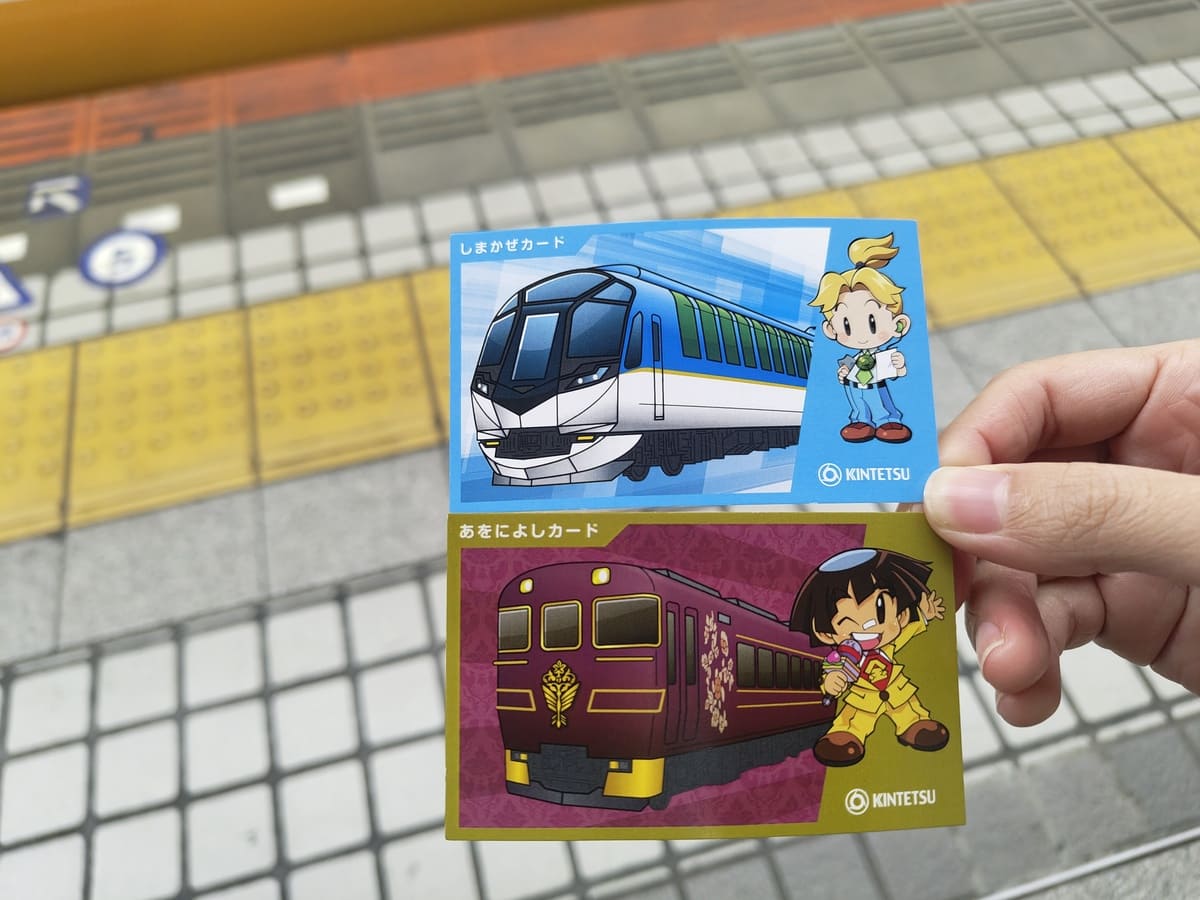
If you’ve ever played Momotetsu, there’s a good chance you’ve dreamed about playing it in real life. The popular Japanese board game sends players racing across Japan’s railway network, rolling dice, buying properties, and discovering train stations you’ve never heard of. It’s chaotic, and strangely educational, especially when it comes to geography and Japan’s many rural areas.
Surprisingly, you can now experience a version of this in real life starting from station like Namba Station in Osaka. Instead of just rolling digital dice, you board actual trains. Instead of landing on properties, you arrive at real countryside towns. The game even gives you a goal station, just like in Momotetsu, and your whole mission is to reach it before the other players.
It’s part travel adventure, part board game, and part “let’s see what happens today.”
So… What Exactly Is Momotetsu?
For those unfamiliar, Momotetsu is a long-running Japanese board game series that plays like a lighter, train-themed Monopoly. Players roll dice to move across train stations, collect money, buy properties, and occasionally get bullied by bad guys. The winner is usually the player who collects the most wealth during the journey, but reaching the designated goal station first gives a huge financial advantage.
What makes Momotetsu fun is the balance between strategy and pure randomness. You can plan your routes and buy properties smartly, but a series of bad dice rolls can force you to stop at tiny countryside stations you didn’t even know existed. The charm of the game is that it encourages exploration.
How to Apply
Momotetsu in Osaka is organized by Kintetsu, whose railway network runs from central Osaka toward Nara and into parts of the Japan countryside, letting players stop at smaller stations they would normally pass without noticing.
Signing up is simple:
- Click here and create an account
- Buy a participation ticket
- Play the game
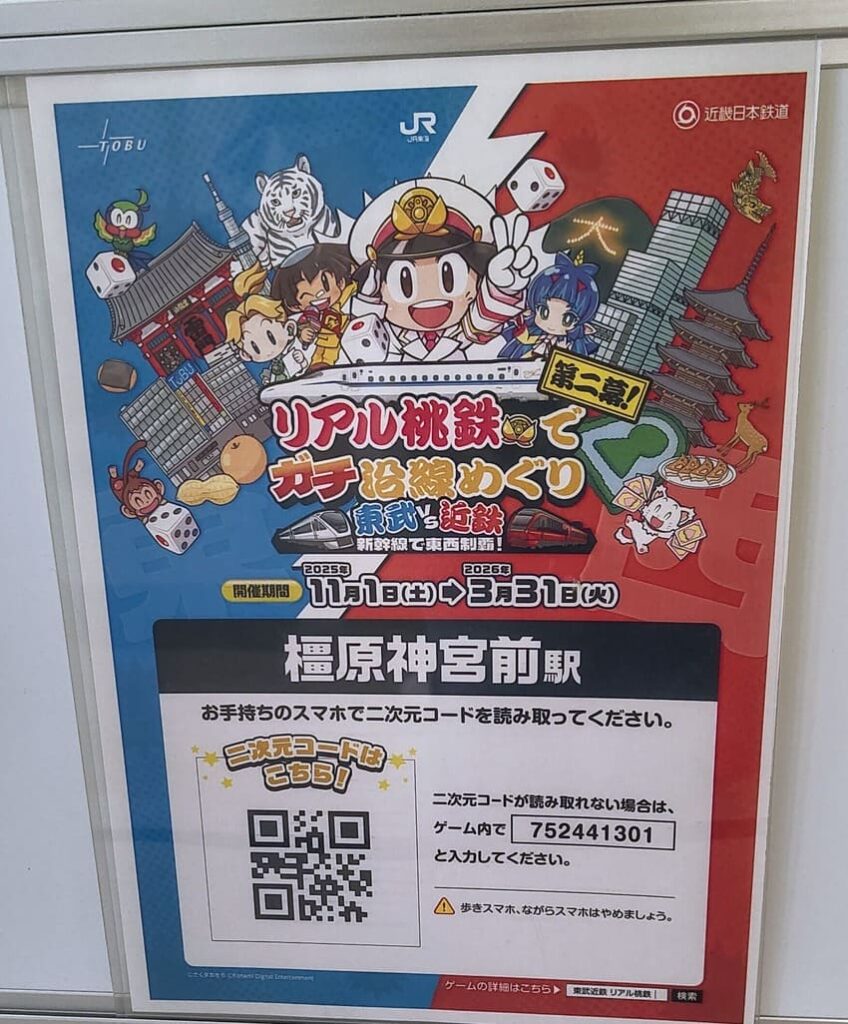
Once the game starts, you actually ride the trains to the stations you roll. When you arrive, you get off and scan a QR code on a Momotetsu poster inside the station to confirm your stop and collect your stamp. Each stamp marks one station on your route, just like moving across the board in the real Momotetsu game.
My Journey From Namba to Kashihara Jingū-mae
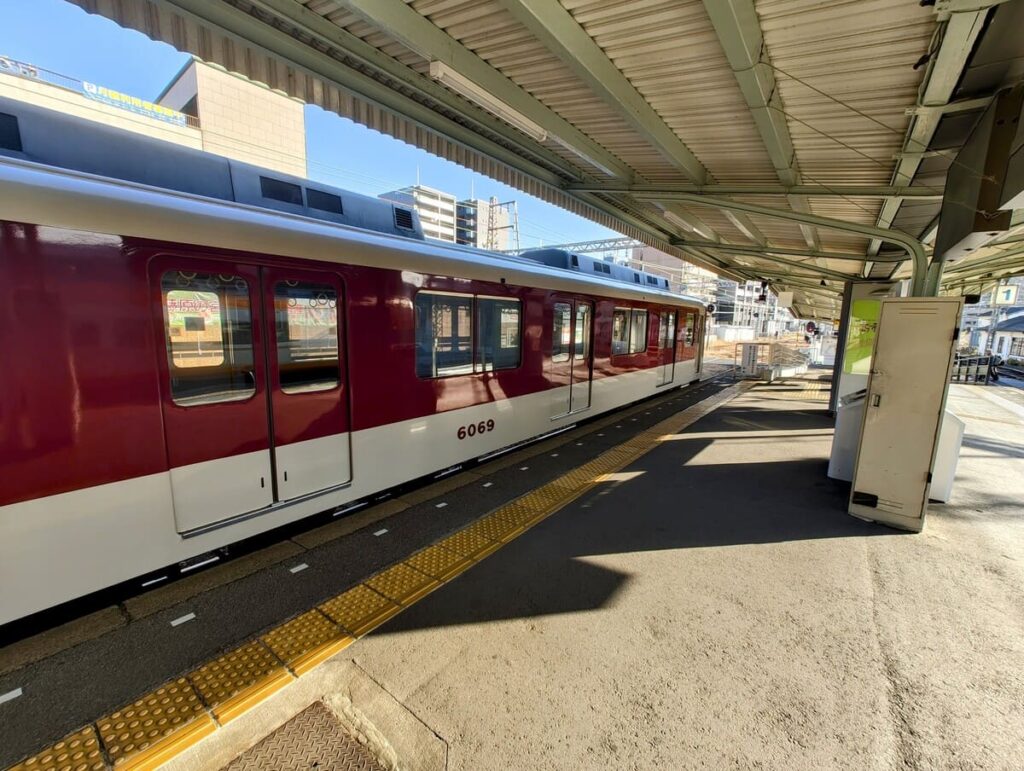
We decided to start from Namba Station, and our goal for the first round was Kashihara Jingū-mae, a place I had never visited before. On the board, it doesn’t look too far. It’s a scenic ride that gradually leaves Osaka’s busy city life and drifts into the quieter rural areas of Japan.
The fun part is that you don’t actually know where you’ll end up on the way. It depends entirely on the dice. Unfortunately for me, I spent a ridiculous portion of the day rolling nothing but 1’s. At first it was funny. Then slightly concerning. Every time I rolled, it was another 1, which meant we kept stopping at tiny rural stations I had never heard of. But this is exactly the charm of the game.
Ando Station
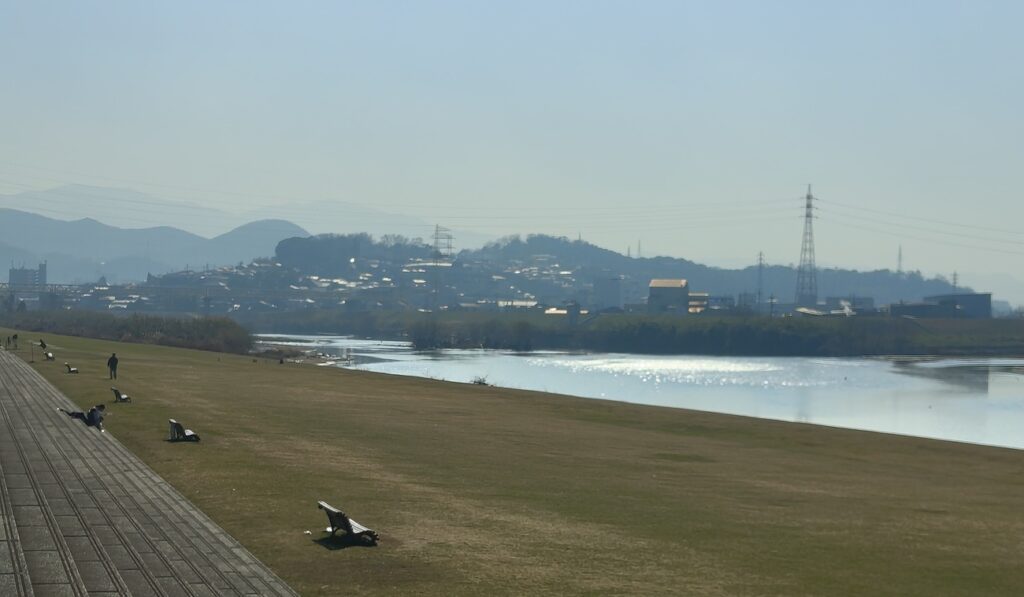
One of the highlights was Ando, a small town surrounded by a scenic river called the Yamato River. Historically, the Yamato river was once dubbed one of the dirtiest rivers in Japan due to high levels of pollution, particularly in the 1970s and early 2000s. However, through extensive sewer upgrades, wastewater controls, and local cleanup efforts, the river’s water quality has improved in recent years, and today it is gradually returning to a healthier state.
Yaginishiguchi Station
The game-ending moment came at Yaginishiguchi Station, where I rolled yet another 1 and mathematically eliminated my chance of reaching the goal in time.
It was devastating. But this unlucky roll turned out to be an unexpected blessing. After stepping out of the station, we started wandering through the sleepy neighborhood, and that’s when we stumbled upon a charming little cafe tucked away on a side street called Hackberry Cafe.
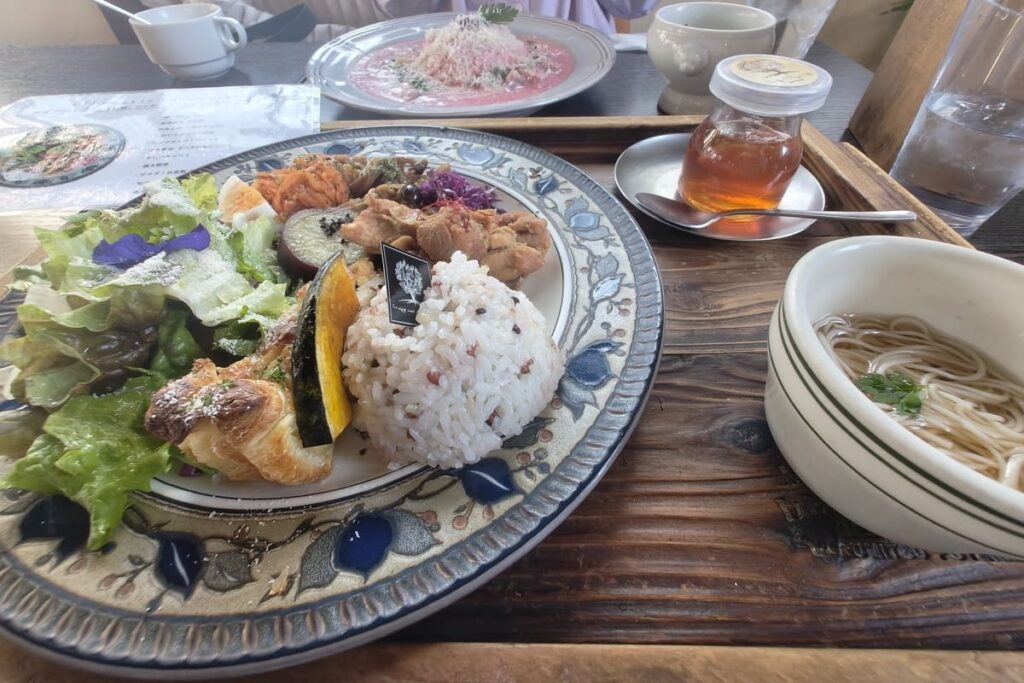
We ordered the Cinematic Lunch Plate and the Pink Omurice, and both were fantastic. The pink omurice felt surprisingly healthy. The sauce was rich with deep flavor and color, coming from beets and other ingredients that blended beautifully with the rice and protein, so it didn’t feel like a heavy lunch at all. The Cinematic Plate was beautifully arranged with so many different components that it felt like sampling several mini dishes all on one plate. Each bite was unique, from marinated vegetables to tender meat and ancient rice blend, making the whole meal feel like a thoughtfully crafted experience rather than a simple lunch.
According to the menu, the Cinematic Lunch Plate has an interesting film connection. It was originally created as a “location bento” (ロケ弁) for the filming of the Japanese movie “My Happy Marriage” (わたしの幸せな結婚). After the shoot, the cafe adapted it into a regular lunch menu, which is how it became the Cinematic Lunch Plate. It’s a fun detail that makes you feel like you’re eating something straight from a movie set.
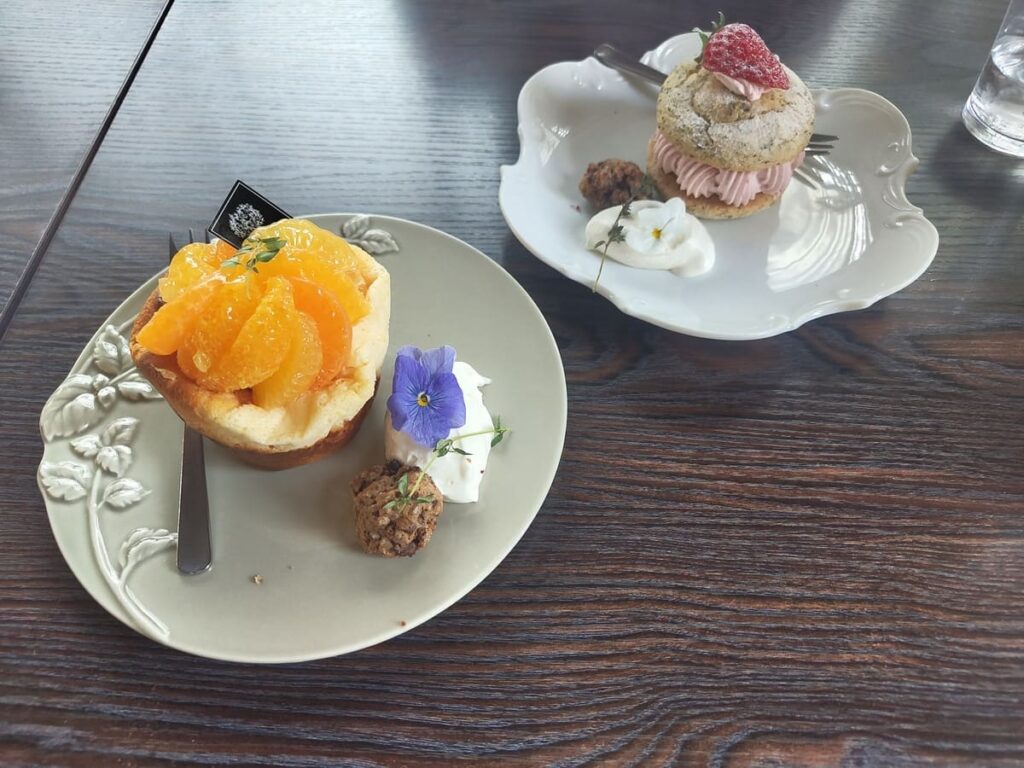
For dessert, we ordered two different sweets. A seasonal mandarin soufflé cheesecake and served with whipped cream, and a strawberry cream choux pastry filled with light berry cream and finished with a fresh strawberry on top. The soufflé had a bright, refreshing flavor that balanced sweetness and acidity well, while the choux pastry was more delicate and airy. Both desserts were beautifully plated with edible flowers and a small cookie on the side. It was the perfect finale to our Momotetsu journey.
Reaching Kashihara Jingū
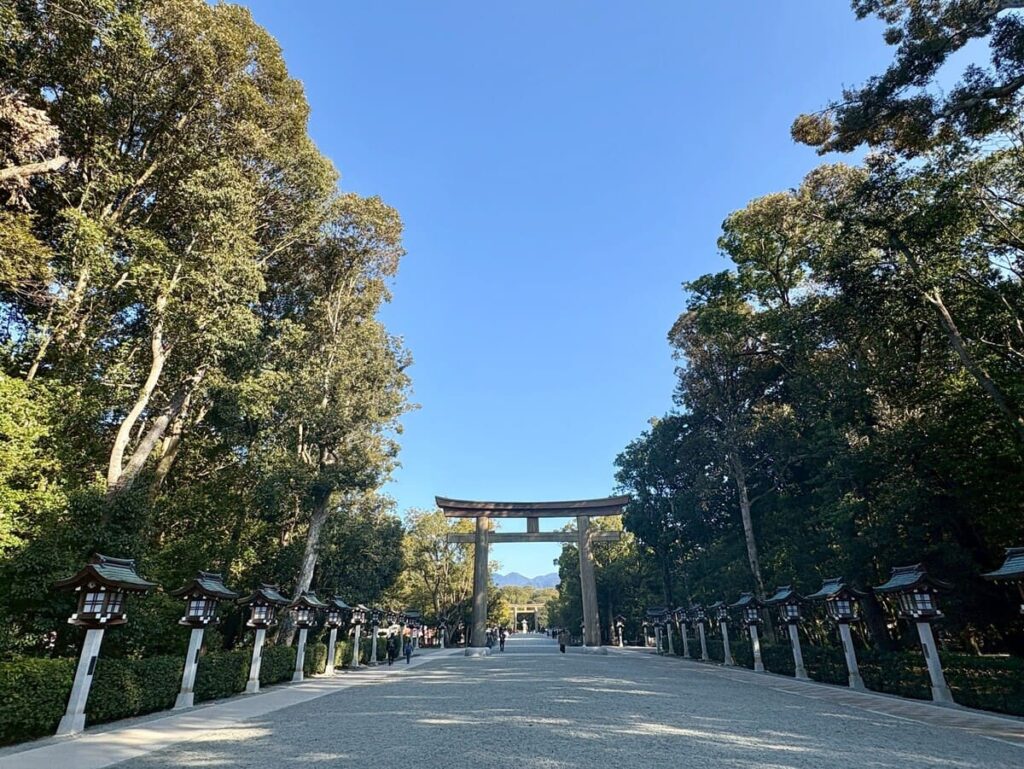
Anyway, speaking of Kashihara Jingū, this shrine is one of the most historically important places in all of Japan. The shrine was constructed in 1890 on the site where Emperor Jimmu, Japan’s legendary first emperor, is said to have ascended to the throne around 660 B.C. according to ancient chronicles.
The shrine was established during the Meiji period as part of a movement to reinforce the Imperial family’s place in Japan’s culture and history after centuries of samurai rule. Within the grounds, you’ll also find memorials tied to early imperial myth and tradition.
Walking through Kashihara Jingū feels majestic. The spacious courtyard and the massive torii gate at the entrance. A reminder that this place is celebrated as the birthplace of Japan’s imperial line and a symbol of the nation’s spiritual roots.
Round Two
We weren’t done yet. We decided to play another round from Kashihara Jingū, and this time our new goal was Nara Station. Thankfully my dice luck improved, and we made better progress. Along the way we landed at Yūzaki Station and Kintetsu Kōriyama Station.
Yūzaki Station
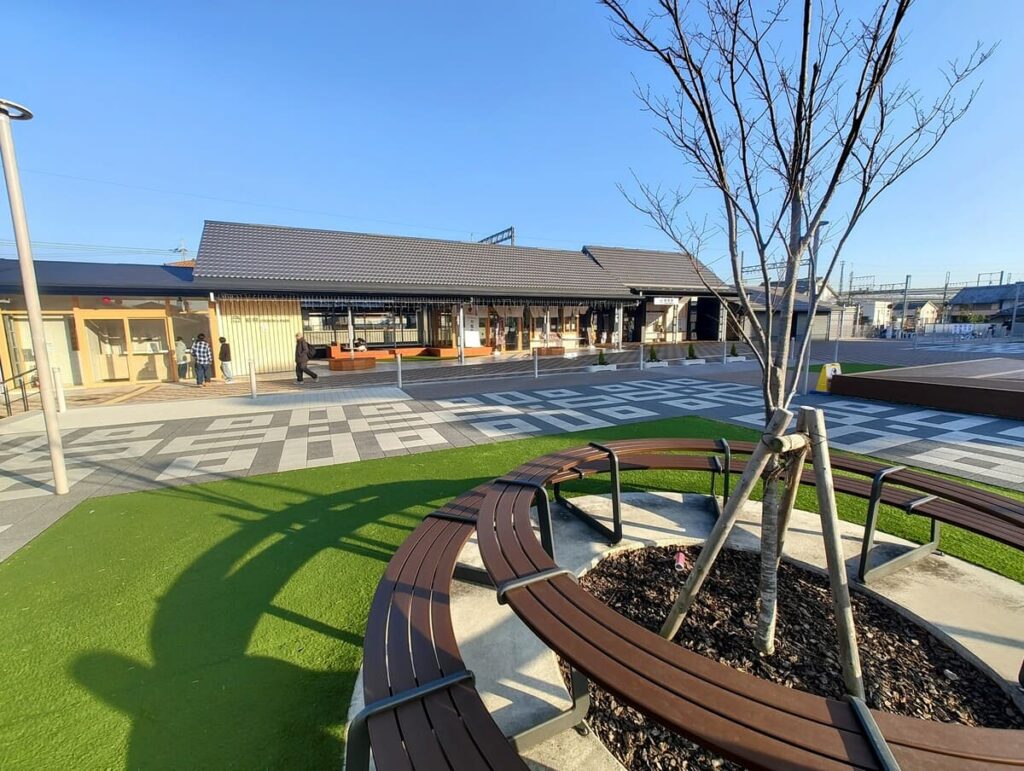
Yūzaki turned out to be much more modern than we expected for a small stop on the Kintetsu Kashihara Line. The station building was rebuilt and redesigned in recent years, with a clean, minimalist look and slopes for easy access, and there’s even a neat little station-front park with a children’s playground right outside.
Kintetsu Kōriyama Station
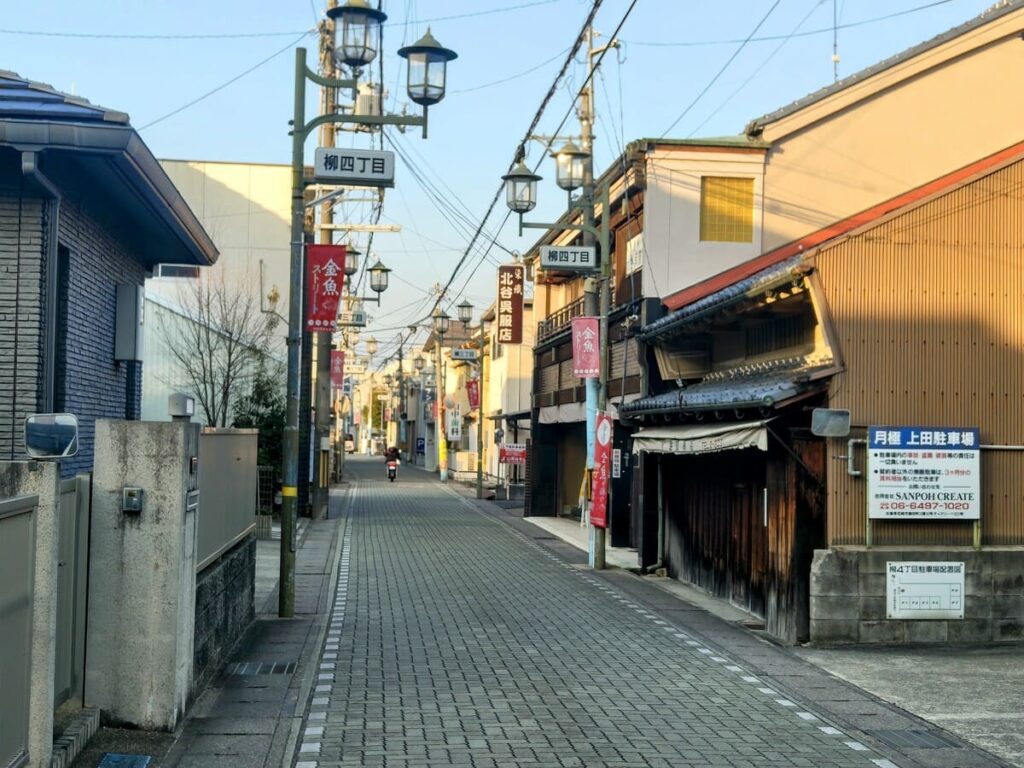
Just a short walk away you find Koriyama Castle and the retro Goldish Street “Yanagi-chō” shopping streets, old-fashioned shops, and even goldfish tanks in front of stores keep the town’s traditional “goldfish city” identity alive. Wandering those streets really did feel like stepping back into the Showa era.
Nara Station
By the time we arrived in Nara, it was already around 5pm. Tired but victorious, we walked straight to Nara Park to see the deer before sunset. It was the perfect chaotic ending to a very long day.
Final Thoughts
Playing Momotetsu in real life turned out to be a new way of experiencing Japan. Instead of rushing from Osaka to Nara in the most efficient way possible, the game forced us to stop at tiny stations, wander through neighborhoods, and discover places we never would’ve seen on a normal trip. From Hackberry Cafe’s cinematic lunch to the majestic grounds of Kashihara Jingū, the journey became just as memorable as the destination.
By the time we finally reached Nara Station and checked the scoreboard, the competitive part of the game didn’t matter anymore. What mattered were the unexpected stop, the good food, the laughter about rolling 1’s, and the strange joy of discovering places that don’t appear in guidebooks. It was the perfect finale to our real-life Momotetsu journey.