
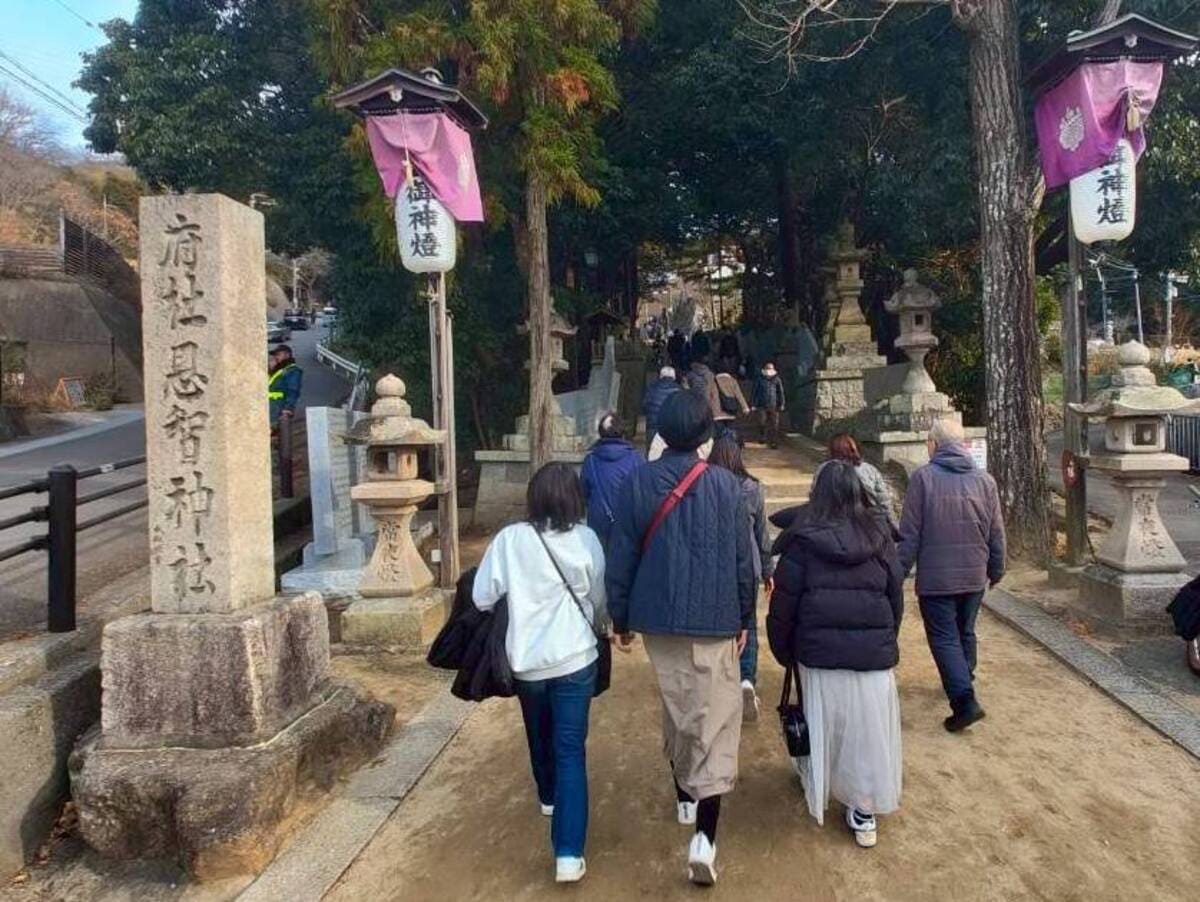
In Japan, the beginning of the year is marked by Hatsumode. The first shrine or temple visit of the New Year. Even people who do not consider themselves religious often take part. Families, couples, and friends visit a Japanese shrine or temple to pray for good health, safety, happiness, and a peaceful year ahead. It is one of the most widely practiced New Year traditions in Japan.
While many visitors flock to famous locations in Kyoto, there are still places where locals quietly continue this tradition away from major tourist crowds. One such place is Onji Shrine, a historic shrine with deep local roots and more than 1,500 years of history, yet relatively unknown to most travelers.
Hatsumode at Onji Shrine
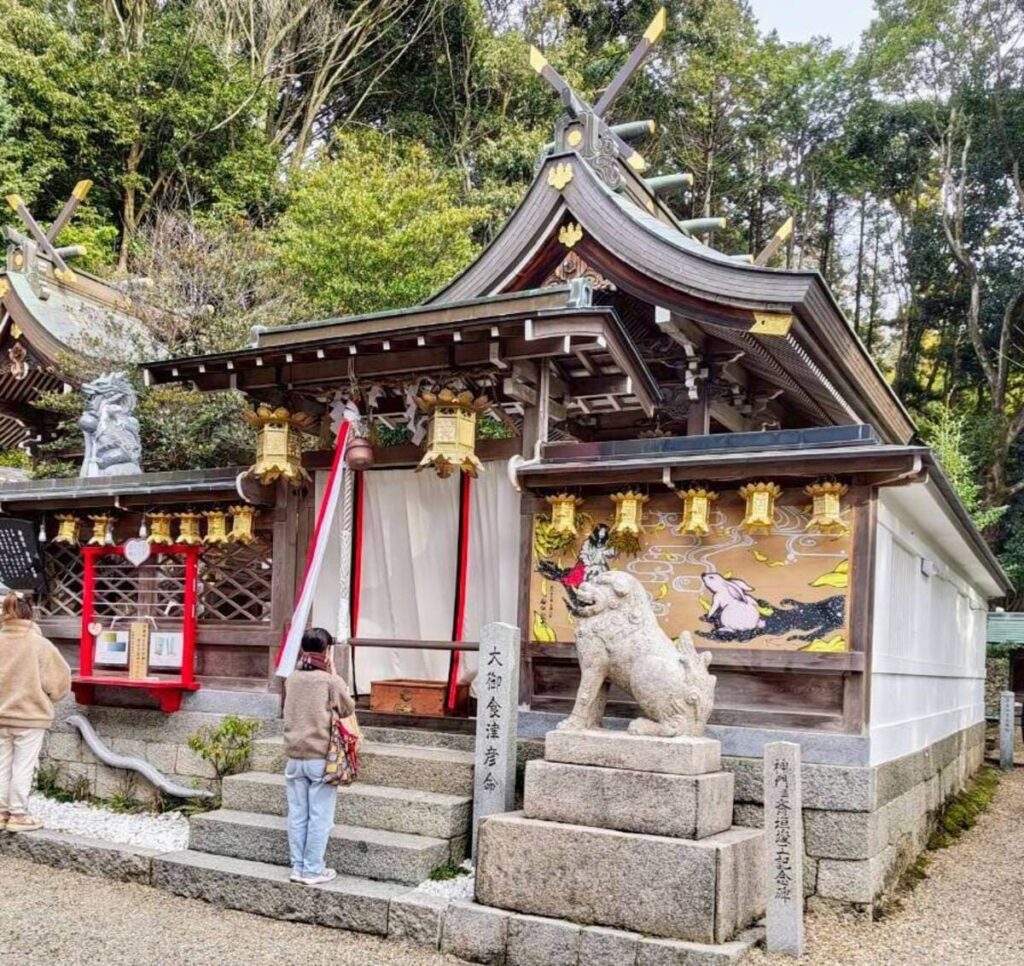
Onji Shrine was founded in ancient times and has long been closely connected to the surrounding community. For centuries, it has served as a place of prayer for agriculture, daily safety, and prosperity, reflecting the rhythms of everyday life rather than grand spectacle.
The shrine is traditionally associated with:
- Harvest and agriculture
- Protection from disasters
- Safe daily life
- Prosperity for families and work
Because of this, Onji Shrine has always been a place where locals come to pray not only during New Year, but throughout the year. For planting seasons, gratitude ceremonies, and important life moments.
Seasonal festivals are held in spring, summer, and autumn, many of them centered on harvest, gratitude, and community wellbeing.
What Happens If You Go Through a Torii Gate?
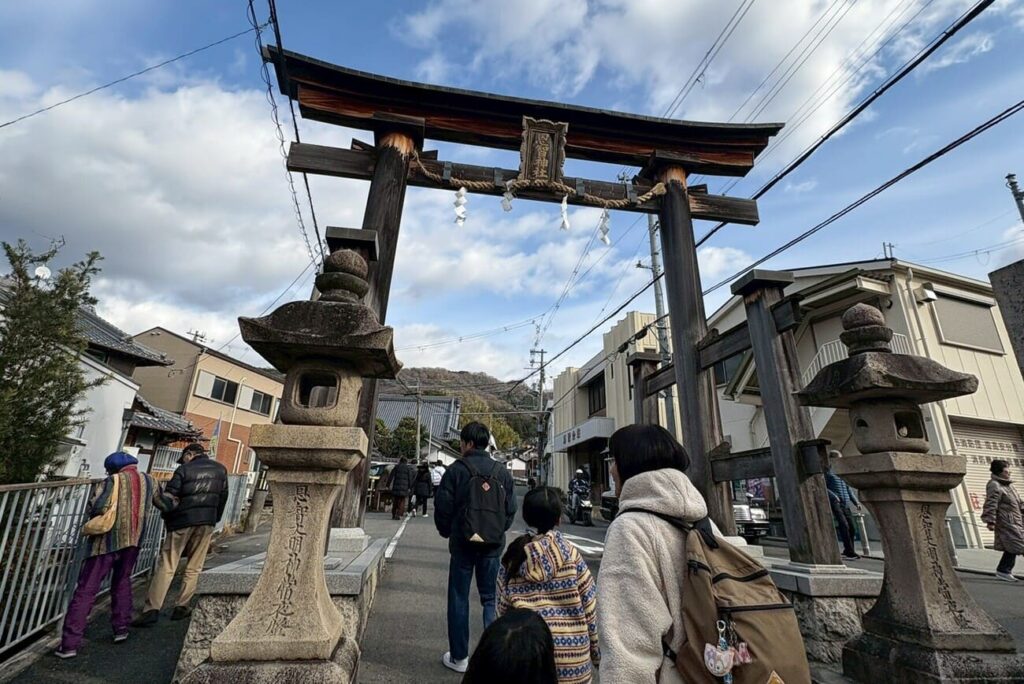
Before reaching the main shrine grounds, visitors first pass through a Torii gate. In Japan, going through a Torii gate is not just entering a physical space. It symbolizes crossing the ordinary world into a sacred one. Everything inside the gate is considered kami no michi, the domain of the divine.
When you walk through a Torii gate, you are acknowledging and respecting this transition. That is why many Japanese people naturally slow down, straighten their posture, and walk more mindfully once they enter. Traditionally, you also avoid walking directly in the center, as the center path is considered the path for the deity.
At Onji Shrine, the path continues uphill after passing through the Torii. This detail is not geographical. Walking uphill has symbolic meaning in Japanese shrine culture. It represents effort, purification, and preparing your body and mind before prayer. This approach path has been used for centuries by worshippers, and along the way you’ll see stone lanterns, banners, and monuments, all of which mark your gradual transition into sacred space.
Donor Stone Pillars
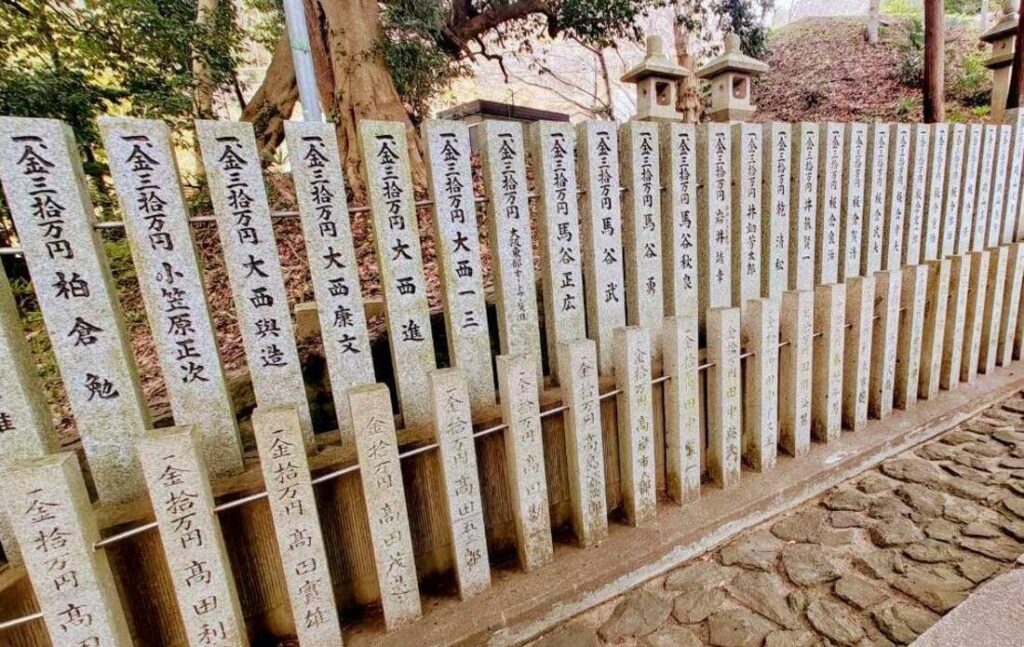
As you walk toward the main grounds of Onji Shrine, you’ll pass rows of stone pillars with engraved names, dates, and donation amounts. These inscriptions may look simple at first, but they tell an important story about the relationship between the shrine and the people who live in the community.
Many pillars list monetary amounts such as 金三拾万円 (300,000 yen) or 金十万円 (100,000 yen) followed by names of individuals, families, or local businesses. These stones act as a permanent record of contributions made to the shrine.
Donations helped pay for:
- Maintenance and repairs
- Replacing old roofs, woodwork, or stone lanterns
- Funding seasonal festivals
- Supporting cultural activities
- Preserving historical structures
Engraving someone’s name on stone is a symbolic gesture of thanks. Walking past these stone pillars makes you feel connected to the long chain of worshippers and community members who built, protected, and preserved Onji Shrine for over 1,500 years.
How to Use Temizuya?
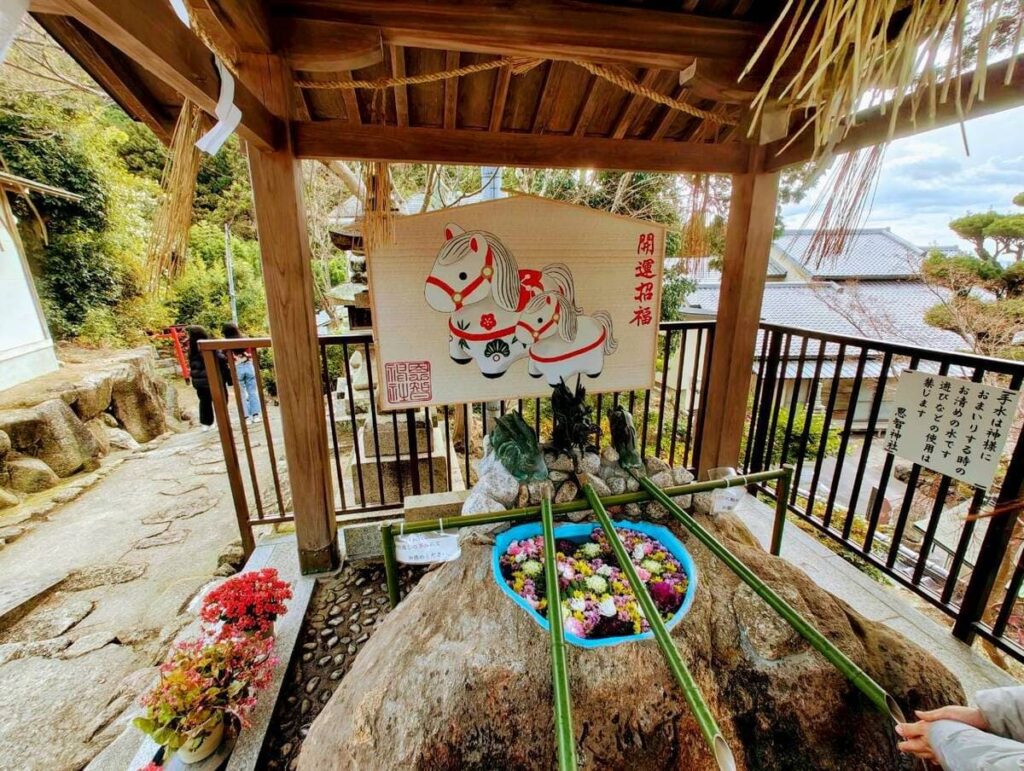
Before praying, visitors cleanse themselves at the temizuya (handwashing area). In 2026, the year of the horse, Onji Shrine features a horse-themed basin.
The basic steps are:
- Use the ladle to wash your left hand
- Wash your right hand
- Traditionally, rinse your mouth (many shrines now ask visitors not to do this)
- Let the water run down the handle to cleanse it
This act represents spiritual purification before approaching the deity.
How to Pray at a Japanese Shrine
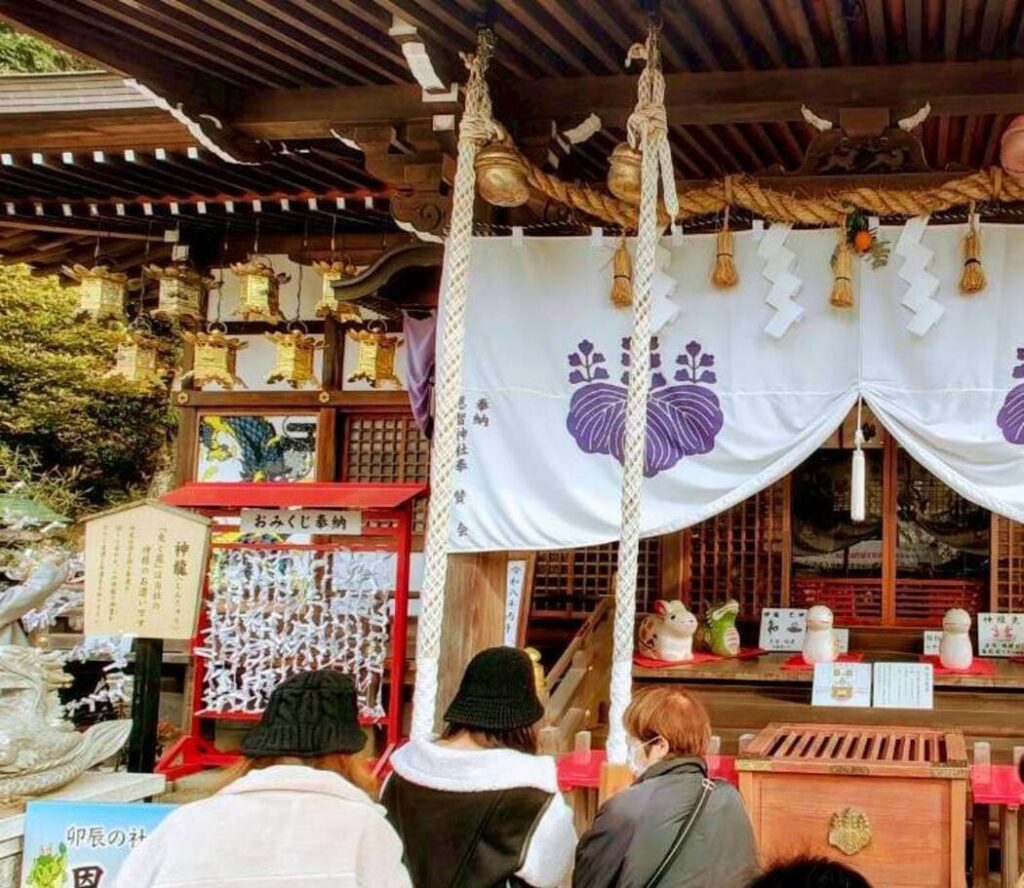
Onji Shrine features a traditional bell that visitors ring before praying. If you’re unfamiliar with how to pray at a Japanese shrine, the general method is simple:
- Bow once lightly
- Ring the bell
- Bow twice
- Clap twice
- Pray silently
- Bow once more
Note: Steps 1 & 2 only apply if the shrine has a bell.
During Hatsumode, people often pray for:
- Health and safety throughout the year
- Family wellbeing
- Success in work or studies
- Good fortune in business
- Protection from misfortune
- A peaceful and stable year ahead
At Onji Shrine, seeing locals pray side by side during Hatsumode made the atmosphere feel deeply autentic and rooted in community tradition.
The History of Onji Shrine
Onji Shrine promotes itself as a powerful spiritual site connected to ancient deities such as divine dragons and turtles. With over 1,500 years of history, it has long been a place for locals to pray for harvests, protection, and household safety. The shrine emphasizes purification, reflection, and connecting with one’s inner self. It is believed that strong natural energy flows through this land, helping visitors wash away impurities and start the year renewed.
Throughout the grounds, you’ll find stone monuments that:
- Describe the shrine’s history
- Record important dates
- Note renovations or official recognitions
- Explain the shrine’s cultural role
These inscriptions quietly preserve centuries of memory, reminding visitors that the shrine has witnessed generations of daily life, change and continuity.
A Local Way to Experience New Year in Japan
While New Year in Japan is often associated with famous shrines and dramatic crowds, places like Onji Shrine show another side of the tradition. Here, Hatsumode feels personal, community-focused, and deeply connected to everyday life.
If you’re spending New Year’s Day in Japan and want to experience Hatsumode in a more grounded, authentic way, Onji Shrine is well worth a visit. It’s a quiet reminder that some of Japan’s most meaningful experiences are found not in famous places, but in the ones locals have cherished for centuries.