
Recently, I had the opportunity to enjoy a wonderful nine-course meal at Nihon Ryori Oohata (日本料理・鍋料理 おおはた), a traditional Japanese restaurant specialising in Japanese cuisine and hot pot dishes.
Unlike a typical restaurant where you order individual dishes, this experience involved a carefully arranged selection of nine courses, each showcasing different ingredients, cooking techniques, and flavours.
From beautifully presented appetizers and fresh maguro sashimi to Saga wagyu beef, matsutake mushrooms, and traditional Japanese desserts, there was plenty to enjoy throughout the meal.
It was not just about eating delicious food, but also experiencing the presentation, seasonal ingredients, and traditions behind Japanese cuisine.
Let me take you through my nine-course dining experience!
What Is a Traditional Japanese Kaiseki-Style Meal?
A Japanese kaiseki restaurant typically serves a multi-course meal consisting of smaller dishes, carefully prepared and presented to highlight seasonal ingredients.
Some dishes focus on fresh seafood, while others highlight grilled ingredients, simmered vegetables, or delicate seasonal flavours.
Presentation is also incredibly important. The arrangement of the food, the plates and bowls used, and even the colours of the ingredients can reflect the season.
Although not every traditional multi-course Japanese meal is strictly classified as kaiseki, the experience at Oohata followed many of the same principles.
Course 1: Hassun (八寸) Seasonal Appetizers
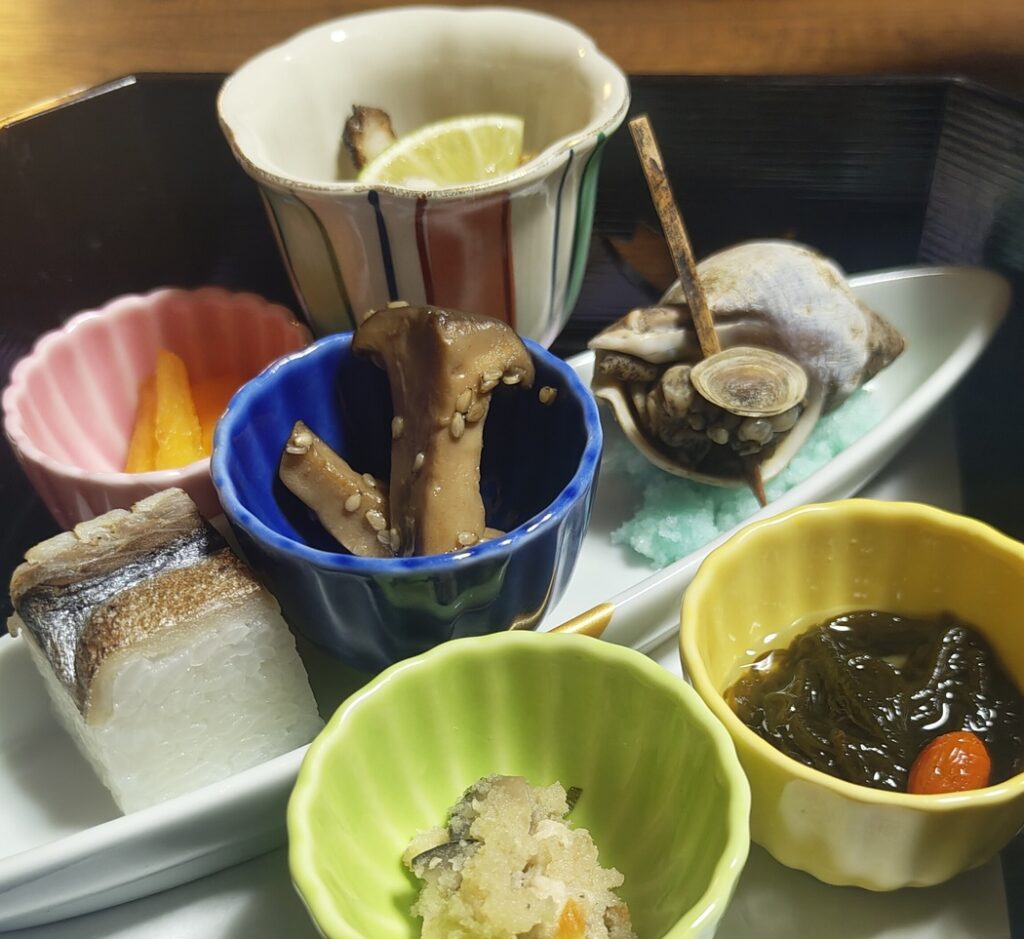
The meal began with Hassun (八寸), a selection of small seasonal appetizers beautifully arranged on a plate.
Hassun is traditionally served to introduce the seasonal theme of the meal. It features several smaller items, each offering different flavours and textures.
The idea is to enjoy a variety of flavours without becoming too full, preparing your appetite for the courses ahead.
Hassun is also a wonderful introduction to Japanese traditional dishes because it often includes ingredients or preparations that visitors might not normally encounter in everyday Japanese restaurants.
It was a lovely way to begin the meal and made me excited to discover what would come next.
Course 2: Shinogi (しのぎ) A Small Dish Between Courses
The second course was Shinogi (しのぎ), which has an interesting role in traditional Japanese dining.
The word shinogi comes from the idea of temporarily satisfying hunger. In Japanese cuisine, it refers to a small dish served to keep guests comfortable between courses without making them too full.
Depending on the restaurant and menu, shinogi might consist of a small portion of sushi, rice, noodles, or another light preparation.
What made this course particularly special was the inclusion of matsutake mushrooms (松茸), one of Japan’s most expensive and highly prized mushrooms!
Matsutake mushrooms are considered a luxury ingredient in Japanese traditional cuisine, especially during autumn. They are famous for their distinctive, rich aroma and earthy flavour. Unlike ordinary mushrooms, matsutake are extremely difficult to cultivate commercially and are mainly harvested from the wild, making them relatively rare and expensive.
Depending on their quality and origin, premium Japanese matsutake mushrooms can cost tens of thousands of yen, or even more, per kilogram!
Their unique fragrance is particularly appreciated in traditional Japanese cooking, where they are often prepared in ways that preserve their natural aroma.
Unfortunately, I completely forgot to take a photograph of this course! 😅
It’s a shame because I wanted to capture every part of my nine-course experience, especially a dish featuring such a special and expensive ingredient.
Nevertheless, getting to enjoy matsutake mushrooms was definitely one of the memorable parts of the meal!
Course 3: Mukozuke (向付): Fresh Japanese Sashimi
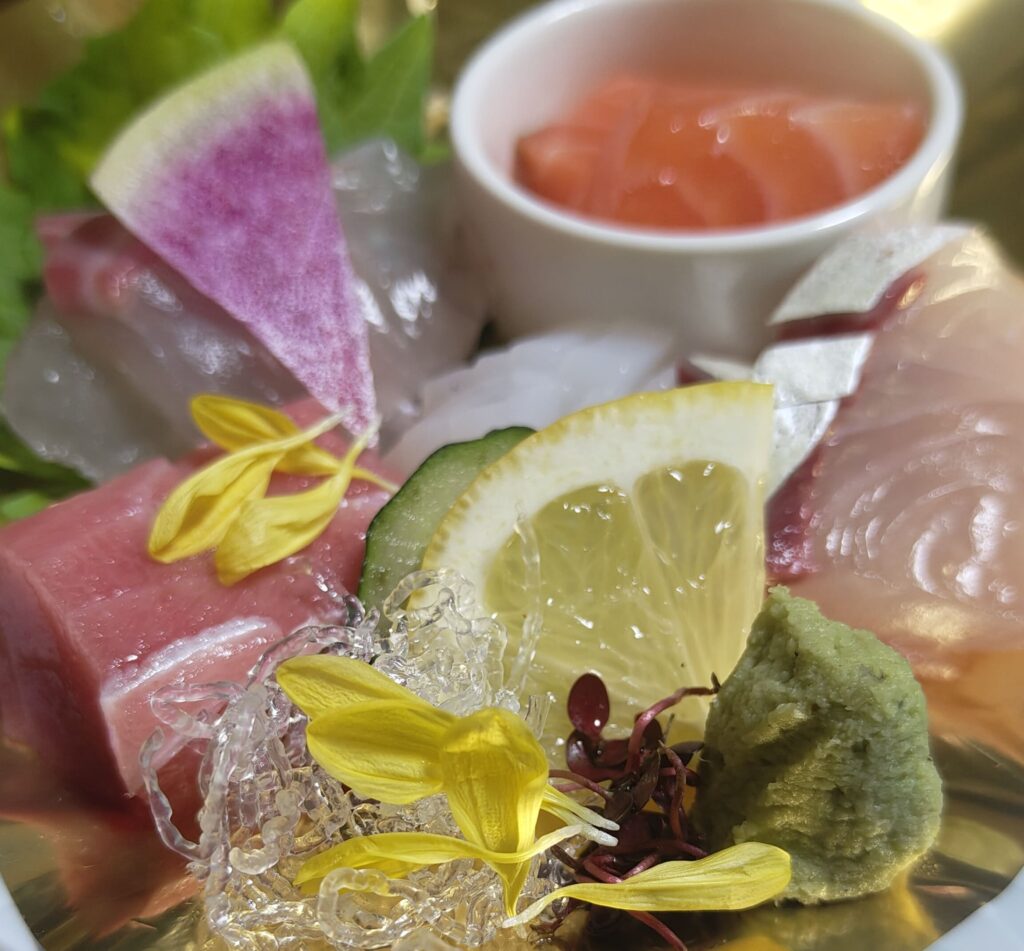
Next came one of my favourite parts of Japanese cuisine: Mukozuke (向付), the sashimi course!
Sashimi is one of the best ways to appreciate the natural flavour and texture of fresh seafood, and this course featured an impressive variety.
The selection included:
- Maguro (マグロ): Tuna
- Tai (鯛): Sea bream
- Toro salmon (トロサーモン): Fatty salmon
Maguro is one of the most recognisable ingredients in Japanese cuisine, particularly because of its popularity in sushi and sashimi. Its rich flavour and smooth texture make it a favourite among seafood lovers.
Toro salmon is known for its rich, fatty character, making it particularly enjoyable for those who prefer softer seafood.
For anyone who loves Japanese seafood, this is definitely one of the highlights of a traditional Japanese restaurant experience.
Course 4: Nimono (煮物): Traditional Japanese Simmered Dishes
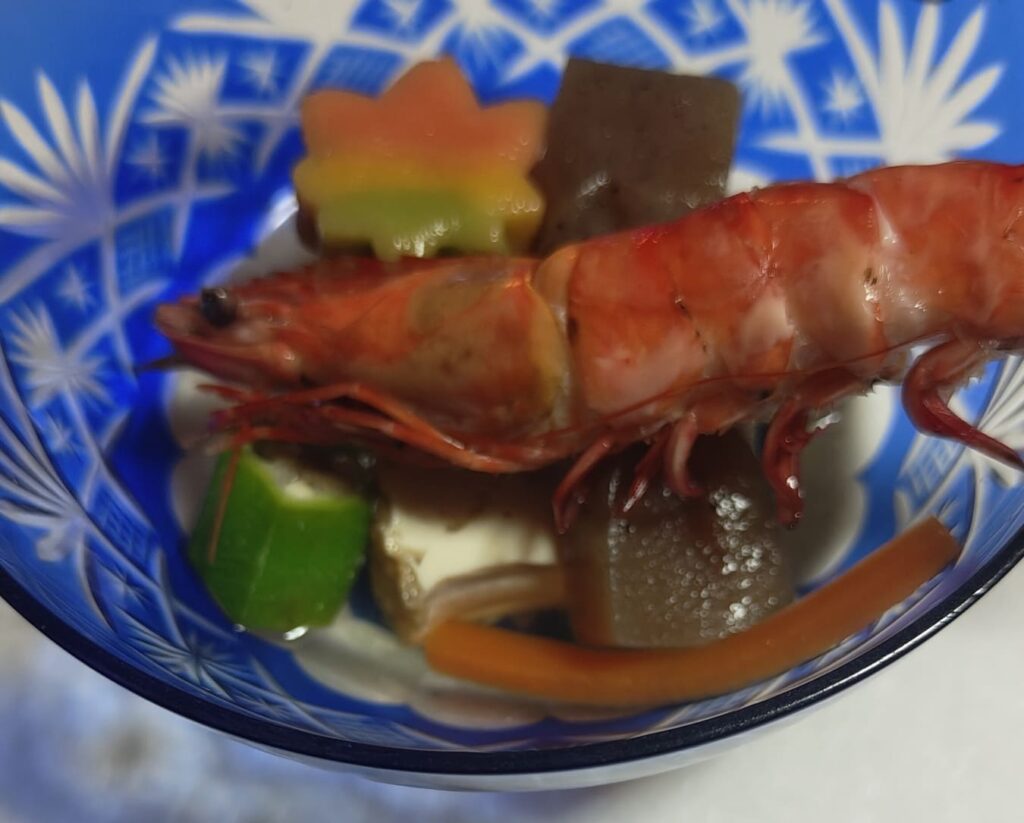
The fourth course was Nimono (煮物), a traditional Japanese simmered dish.
Nimono refers to ingredients gently cooked in a seasoned liquid, commonly using combinations of dashi, soy sauce, mirin, and sake.
Unlike deep-frying or grilling, simmering allows the ingredients to gradually absorb flavour while maintaining their natural characteristics.
After enjoying fresh sashimi, the warm and comforting nature of nimono provided a lovely change of pace.
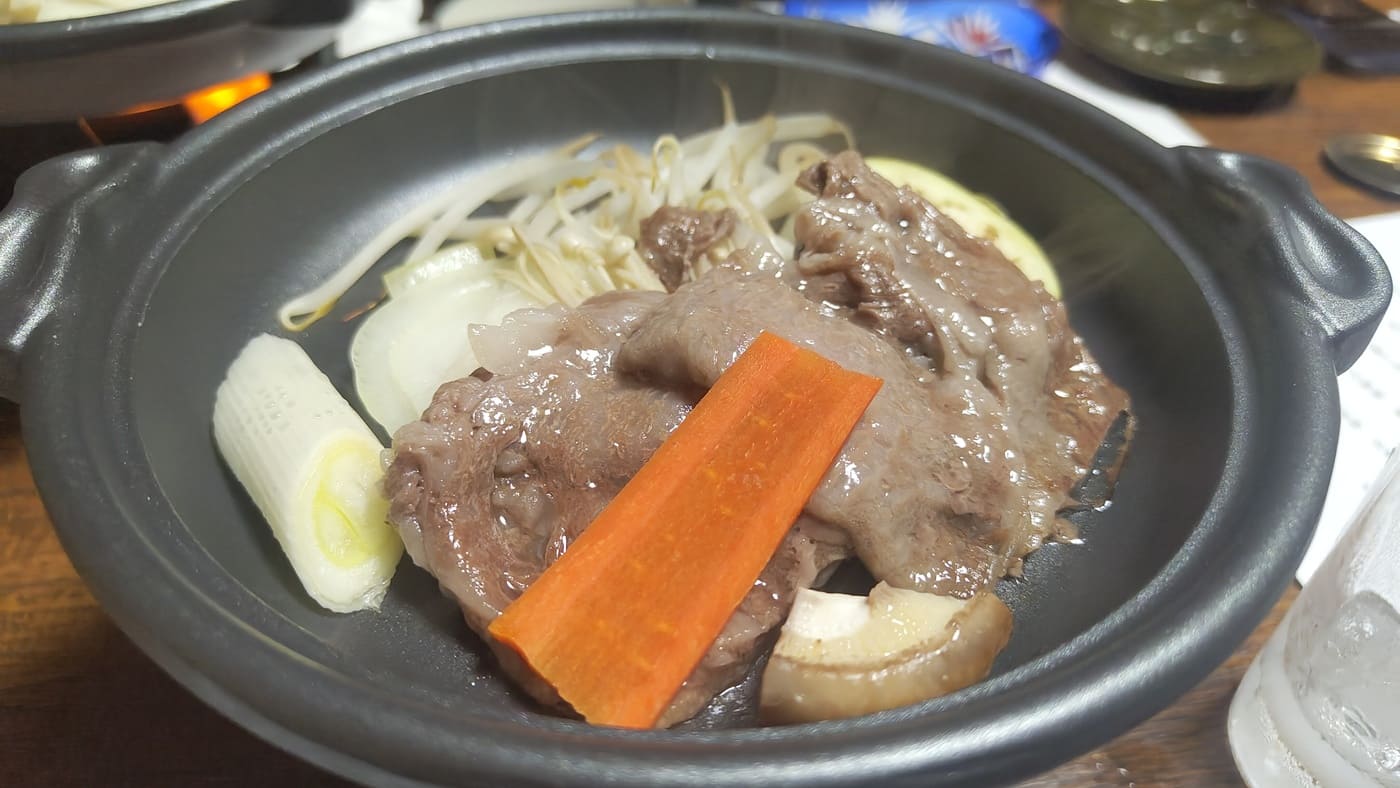
Course 5: Yakimono (焼き物): Premium Saga Wagyu Beef
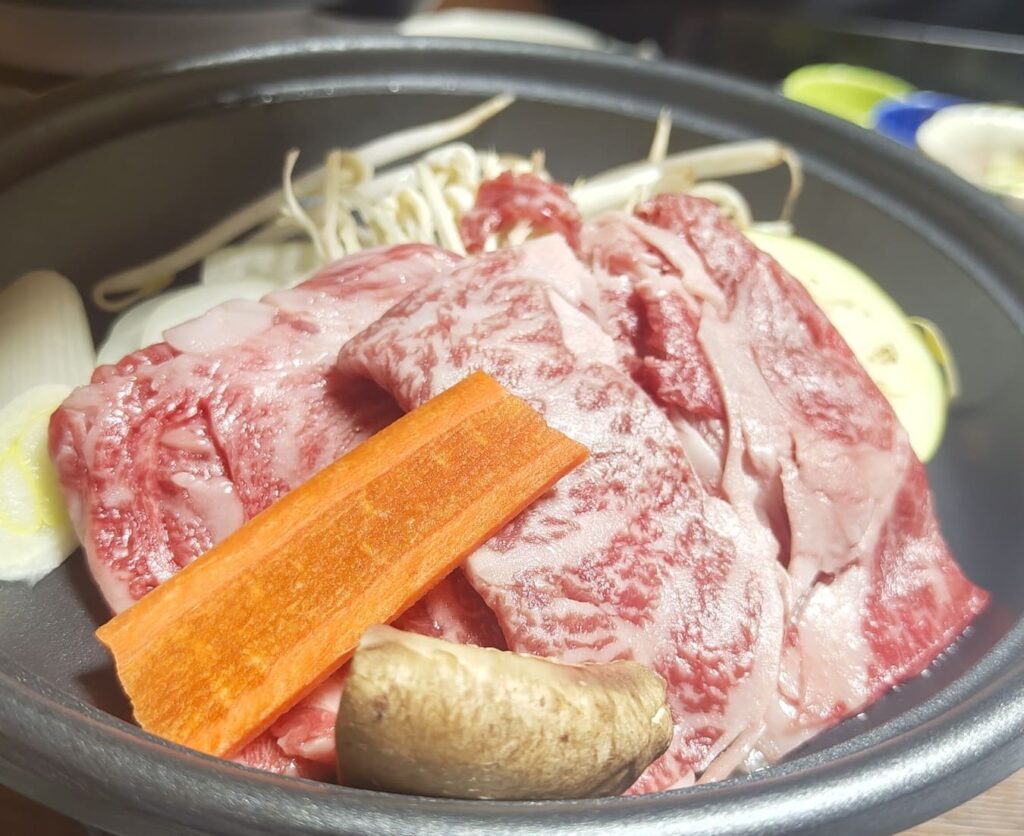
Next came one of the most exciting parts of the meal: Saga wagyu beef!
Yakimono (焼き物) literally refers to grilled food and is an important part of many traditional Japanese multi-course meals.
Saga beef comes from Saga Prefecture in Kyushu and is particularly famous for its beautiful marbling and rich flavour.
Japanese wagyu is prized for its intramuscular fat, which gives the meat its distinctive tenderness and buttery texture.
Unlike some beef dishes that rely heavily on sauces, premium wagyu can be enjoyed with relatively simple seasoning, allowing the quality of the meat to take centre stage.
This part of the meal also featured vegetables prepared in a shabu-shabu style.
Shabu-shabu is a Japanese hot pot cooking method in which ingredients are briefly cooked in hot broth. The name is often associated with the swishing motion used when cooking thin slices of meat.
The combination of rich wagyu and lighter vegetables offered a satisfying contrast.
For anyone interested in trying premium Japanese beef, Saga wagyu is definitely something worth looking out for when visiting Japan.
Course 6: Oshinogi (お凌ぎ) : Japanese Chawanmushi with Matsutake Mushrooms
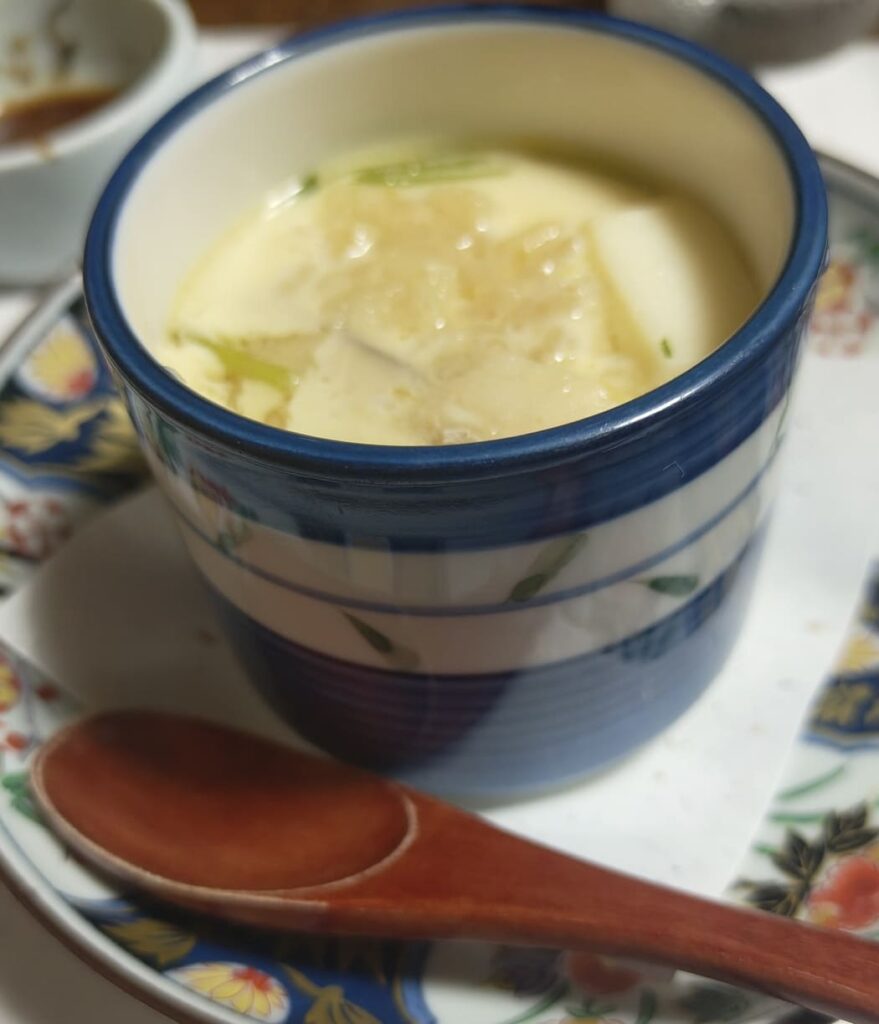
The sixth course was Oshinogi (お凌ぎ), featuring what appeared to be chawanmushi (茶碗蒸し), a traditional Japanese steamed egg custard.
Chawanmushi is a popular dish in Japanese traditional cuisine, made by gently steaming a mixture of eggs and dashi (Japanese soup stock). Unlike the sweet custards commonly found in Western desserts, chawanmushi is savoury, with a delicate flavour and an incredibly soft, silky texture.
It is usually served warm in a small ceramic cup and eaten with a spoon. Depending on the restaurant, chawanmushi can contain ingredients such as chicken, shrimp, shiitake mushrooms, or seasonal vegetables.
What made this particular dish special was that I believe it contained matsutake mushrooms (松茸), one of Japan’s most expensive and highly prized mushrooms!
Matsutake mushrooms are especially associated with autumn in Japan. They are famous for their distinctive earthy aroma and are considered a luxury ingredient in Japanese traditional cuisine.
Unlike ordinary mushrooms, matsutake are extremely difficult to cultivate commercially and are mainly harvested from the wild. This makes them relatively rare, with premium Japanese-grown matsutake sometimes selling for tens of thousands of yen per kilogram or more.
Matsutake are particularly appreciated for their fragrance, which pairs beautifully with the delicate flavour of dashi and steamed egg custard.
The chawanmushi itself was wonderfully smooth and comforting, offering something completely different from the previous courses.
Course 7: Shiizakana (強肴) : Crispy Japanese Tempura
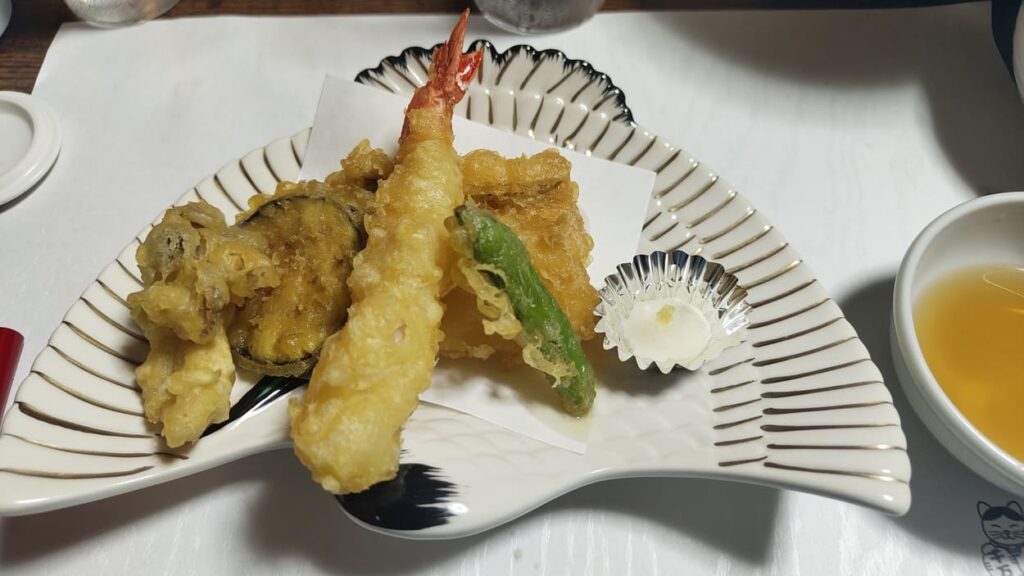
The seventh course was Shiizakana (強肴), which featured tempura.
Shiizakana refers to an additional substantial or savoury dish served during a traditional Japanese meal. Depending on the restaurant, it might include meat, seafood, vegetables, or other preparations.
In my case, it was tempura!
Tempura is one of Japan’s most recognisable traditional dishes, consisting of ingredients coated in a light batter and deep-fried until crispy.
Although tempura is widely available throughout Japan, it can be particularly enjoyable as part of a multi-course meal.
Well-prepared tempura should have a delicate, crisp coating rather than a thick, heavy layer of batter.
The goal is to preserve the flavour of the ingredients while adding a pleasant crunch.
After several courses featuring raw, simmered, and grilled ingredients, the crispy texture of tempura offered another enjoyable contrast.
Course 8: Oshokuji (御食事) : Rice, Soup, and Japanese Pickles
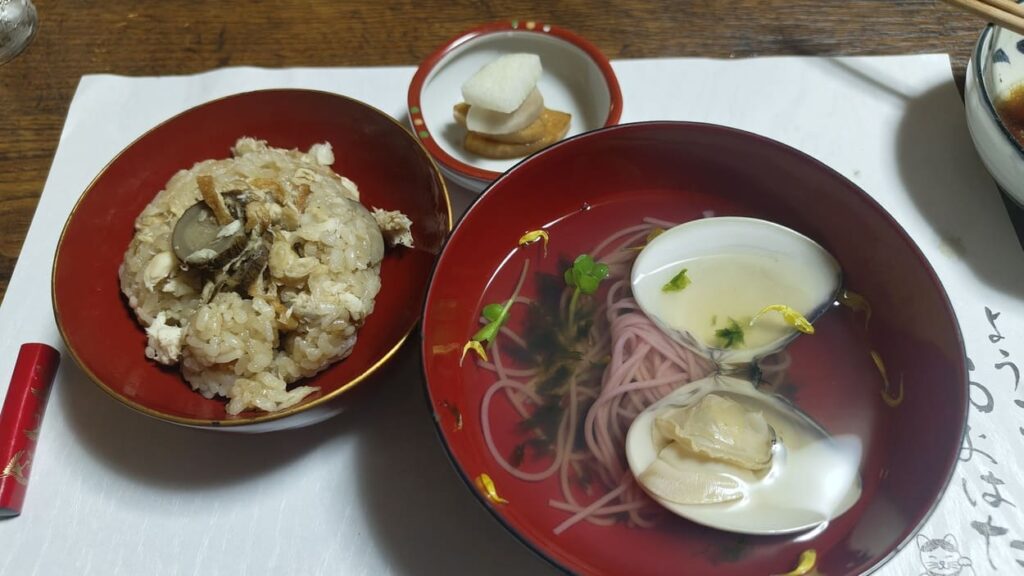
As the meal approached its conclusion, the eighth course was Oshokuji (御食事), the traditional rice course.
In Japanese dining, rice is much more than just a side dish. It is an essential part of the country’s food culture.
This course featured rice accompanied by soup and Japanese pickles.
Japanese pickles, known as tsukemono (漬物), are commonly served with rice and can include vegetables preserved using salt, vinegar, rice bran, or other traditional methods.
They provide refreshing flavours and textures that complement the rice.
Soup is another important part of a traditional Japanese meal, helping bring the dining experience to a comforting conclusion.
What I find interesting is that even after enjoying several elaborate courses, the meal returns to something very familiar in Japanese households: rice, soup, and pickles.
It is simple, comforting, and deeply connected to everyday Japanese food culture.
Course 9: Mizugashi (水菓子): A Refreshing Japanese Dessert
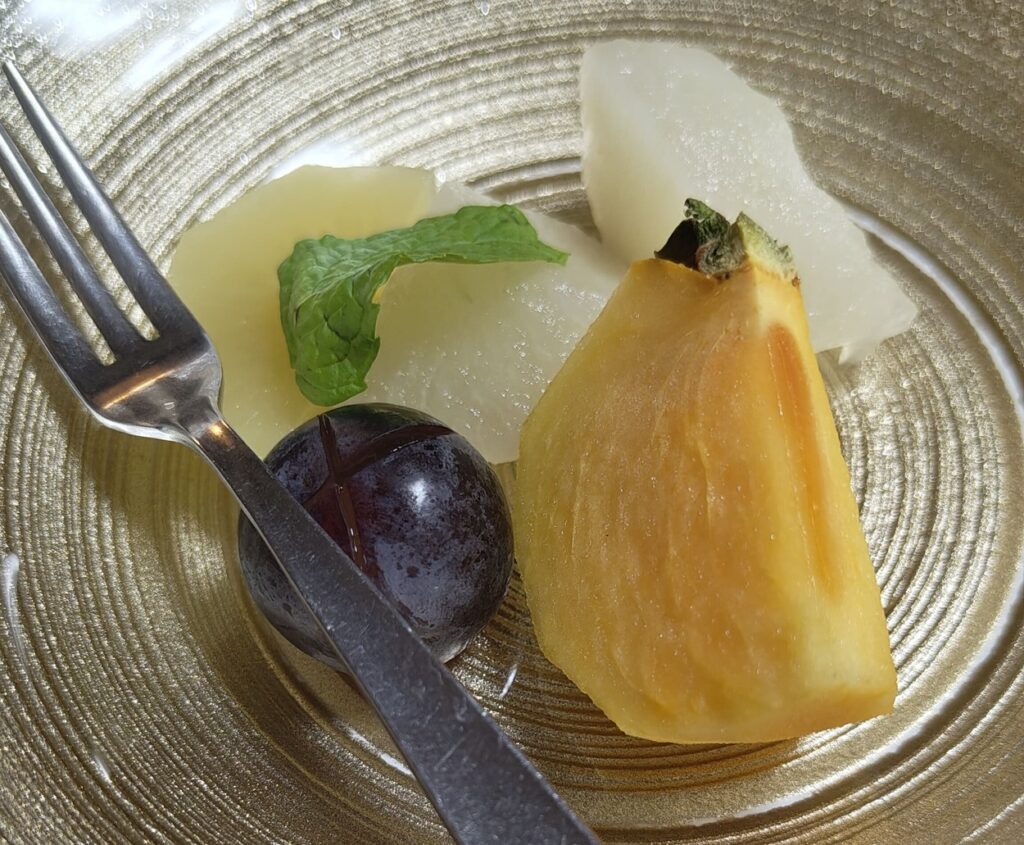
Finally, it was time for dessert!
The ninth and final course was Mizugashi (水菓子), which traditionally refers to fresh fruit served at the end of a Japanese meal.
Seasonal fruit is a popular choice because it allows guests to appreciate the natural sweetness of the ingredients.
In Japan, fruit is often treated as something special, with considerable attention given to quality, appearance, and flavour.
Mizugashi provides a refreshing finish after enjoying a wide variety of savoury dishes.
Rather than leaving you feeling overly full from a heavy dessert, it brings the meal to a gentle and satisfying conclusion.
It was a lovely way to finish my nine-course experience.
Final Thoughts: Is a Traditional Japanese Restaurant Worth Visiting?
After experiencing all nine courses at Nihon Ryori Oohata, I gained an even greater appreciation for the variety and attention to detail found in Japanese traditional cuisine.
What I enjoyed most was that every course offered something different.
The fresh maguro showcased the natural flavours of Japanese seafood, while the Saga wagyu highlighted the quality of premium Japanese beef.
The matsutake mushrooms introduced a distinctive seasonal ingredient, and the nimono and tempura demonstrated completely different Japanese cooking techniques.
Even the smaller courses, such as shinogi and the final rice dish, had important roles in the overall dining experience.
One thing worth remembering is that traditional Japanese multi-course meals are not necessarily about eating large portions of food. Instead, they focus on enjoying a variety of carefully prepared dishes in a particular sequence.
I highly recommend trying a traditional Japanese restaurant that offers a multi-course meal.
It is a wonderful opportunity to discover Japanese traditional dishes, experience seasonal ingredients, and learn more about Japan’s food culture.
And if you have never tried a Japanese kaiseki restaurant before, it is definitely an experience worth adding to your Japan travel itinerary.
For me, this nine-course meal was more than just a delicious dinner. It was a chance to explore the traditions, flavours, and craftsmanship that make Japanese cuisine so special.